
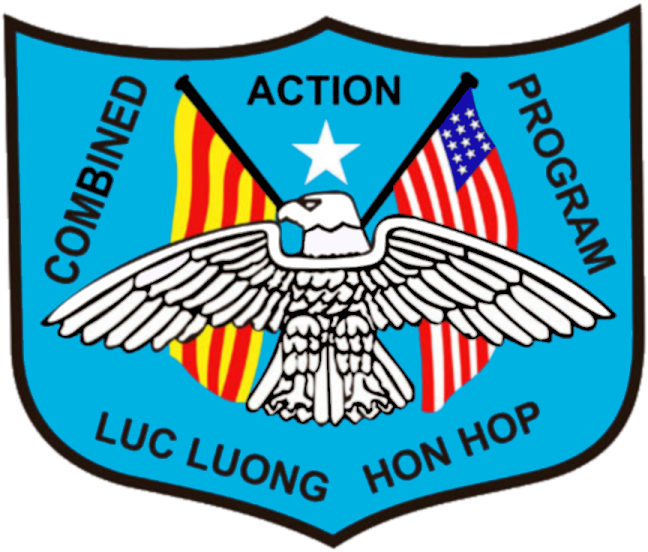
Few figures in American military history have been as maligned by soldiers and civilians alike as General William Westmoreland, who headed the American war effort in Vietnam from 1964 to 1968. For civilians Westmoreland was a bloody minded ear-counting artilleryman content to send draftees into an attritional meat grinder. For soldiers, Westmoreland embodied the worst institutional aspects of the US military: a hidebound conventionalist who lacked the ability to grasp the modern challenges of neutralizing a revolutionary movement. Of course, neither are truly accurate, but a more nuanced examination of efforts at pacification under Westmoreland can shed light on the attempts made by American forces and perhaps rehabilitate Westmoreland’s legacy. The efforts in the Combined Action Program[1] initiated by the Marine Corps, we can see some of the major challenges faced by Westmoreland and highlight continuities between his command and that of his successor, General Creighton Abrams. Far from a drastic reversal in course, as posited by authors like Lewis Sorley, the ascent of Abrams must be seen as a continuation of many policies put in place by Westmoreland rather than a repudiation.
As American involvement in Vietnam escalated in 1966, the Army Staff produced a report titled “A Program for the Pacification and Long-Term Development of South Vietnam” (PROVN), stressing the importance of a political approach to military problems, “the critical actions are those that occur at the village, the district and provincial levels. This is where the war must be fought; this is where the war and the object which lays beyond it must be won.”[2] Since then, the findings in PROVN have been used as a bludgeon against Westmoreland, casting him as an archaic figure who just “didn’t get it,” with some going as far as to accuse Westmoreland and his fellow generals of burying the report and that it was only Abrams’ dedication to the guidelines laid out in the PROVN report that could have won the war.[3]
This view is overly simplistic and unnecessarily vilifies Westmoreland and lauds Abrams. A doctrine stressing the combination of security and political-economic measures to combat an insurgency had in some cases been in existence for nearly a generation before Vietnam, as evidenced by the experience of Marines fighting the “small wars” of the inter-war period.[4] With this in mind, we can look at the actions of the Combined Action Program in its proper context: a program put in place by an institution putting previous lessons into action adapted to conditions in the area of operation with the goal of straining guerillas from the populace and ensure civilian compliance if not support. In so doing, it was hoped that programs like CAP would reduce what Bard E. O’Neill termed the exoteric appeal (i.e. tangible benefits) of cooperation with the Viet Cong, and through close cooperation of Popular Force militias, render the Viet Cong unable to project force into villages, and hopefully dismantle its parallel governmental infrastructure.[5]
In practice, a marine squad’s mission as part of a CAP action proved to be intensely complicated, calling on men no older than 25 to make command decisions that could affect hundreds if not thousands of civilians in the surrounding hamlets. In The Village, Bing West stresses the complex web of village politics that lay at the heart of the region’s relationship with local Viet Cong forces. By living amongst the villagers the squad acted as cops walking a beat, becoming intimately familiar with the rhythms of life in the hamlet with a disruption often indicating immediate danger.[6] Additionally, the presence of a squad of marines often emboldened the local Popular Force troops and acted as a force multiplier in the area. When properly managed, a Combined Action Platoon could weed out Viet Cong supporters, disrupt their attempts at establishing parallel institutions to rival the South Vietnamese government, protect villagers from terrorist attacks and coercion, and slowly but surely spread governmental control outward into the surrounding countryside with a minimal American commitment of troops.
While many CAP activities painstakingly built a harmonious relationship with local villagers, it remained one weighed down by day-to-day graft and deception. Simple corruption and backbiting often ground away what precious little authority village and provincial chiefs had over their jurisdictions and often served to reinforce the revolutionary appeal of the Viet Cong.[7] Additionally, placed in a unique and difficult political-military position, the personality of the individual troops involved could drastically affect relations with the village, calling for an extraordinary level of tact and intelligence from the officer in charge down to junior enlisted.[8] This drastically limited the number of marines available for CAP duty, as one moment of bad judgement could severely hamper pacification efforts.
In the face of a particularly vigorous Viet Cong insurgency, however, CAP units could all too easily find themselves isolated, a ripe target for an enterprising Viet Cong main force battalion, as experienced by Bing West. It was only a hesitation by a squad of Viet Cong sappers that prevented his base from being completely overrun. Despite holding on to the position, the squad suffered heavy losses without inflicting similar ones on the attackers.[9] In the face of this threat, it is understandable that officers like Westmoreland would dedicate a considerable amount of forces to the elimination of large units in the countryside rather than risk the piecemeal elimination of highly motivated marine squads attempting to provide local security and pacification. In fact, according to a 1966 study by the Joint Chiefs of Staff indicated that offensive pressure against Viet Cong and North Vietnamese Army forces in the countryside often acted to spur civilian development in those areas.[10] Proponents of Abrams often use this concern with large unit combat as an example of how out of touch Westmoreland was, and how his replacement innately understood the complexities of unconventional warfare. These apologists often leave out a crucial element of the new situation facing Abrams after his taking of command: The Tet Offensive of 1968, which played so crucial a role in Westmoreland’s dismissal, effectively destroyed the Viet Cong as an independent force. The devastation of the Viet Cong main forces drastically weakened the number of large units it could field, and thus, Abrams could shift more comprehensively to village pacification. It was not Abrams who initiated the change in tactics, but a change in circumstances which necessitated it.
With the example of the Combined Action Program (and other programs like CORDS and CIDG, which are beyond the scope of this review), it is clear that General Westmoreland’s reputation as a conventionalist fighting the wrong war is largely undeserved. Experiments at pacification and civil-military cooperation were extensive under his command, more so than many military historians would like to give credit. His alleged bifurcation of the war effort into large unit combat and the war in the villages was in fact the beginnings of a two-fold approach to eliminating an insurgency that was simultaneously native to South Vietnam, and actively abetted by conventional foreign troops.
[1] CAP was not the only pacification program of its type to be employed in South Vietnam, and was often combined with Civil Operations and Revolutionary Development Support ( CORDS). An incubator for these programs can be seen in the Civilian Irregular Defense Group program (CIDG) where the first advisors sent to South Vietnam recruited paramilitary forces from minority populations in the Vietnamese highlands.
[2] Lewis Sorley, A Better War : The Unexamined Victories and Final Tragedy of America’s Last Years in Vietnam (New York: Harcourt Brace & Co., 1999), 20.
[3] Andrew J. Birtle, “Provn, Westmoreland, and the Historians: A Reappraisal,” Journal of Military History 72 (October 2008): 1215.
[4] Major Brooks R. Brewington, “Combined Action Platoons: A Strategy for Peace Enforcement,” ed. Department of the Navy (Washington DC: U.S. Marine Corps, 1996), 5-6. It’s worth noting that the Small Wars Manual of 1940 stresses the difference between a major war which requires hatred of the enemy to induce bravery, while small wars require “tolerance, sympathy and kindness” towards the civilian population.
[5] Bard E. O’Neill, Insurgency & Terrorism : From Revolution to Apocalypse, 2nd ed. (Washington, D.C.: Potomac Books, 2005), 100-06.
[6] Francis J. West and Copyright Paperback Collection (Library of Congress), The Village (New York, NY: Pocket Books, 2003), 23.
[7] Ibid., 207.
[8] Jim Seaton, “A Political-Warrior Model: The Combined Action Program,” Armed Forces and Society 20, no. 4 (1994): 558.
[9] West and Copyright Paperback Collection (Library of Congress), 105. It’s worth nothing that at the end of the day
[10] Birtle, 1226.








 Le Grognard