
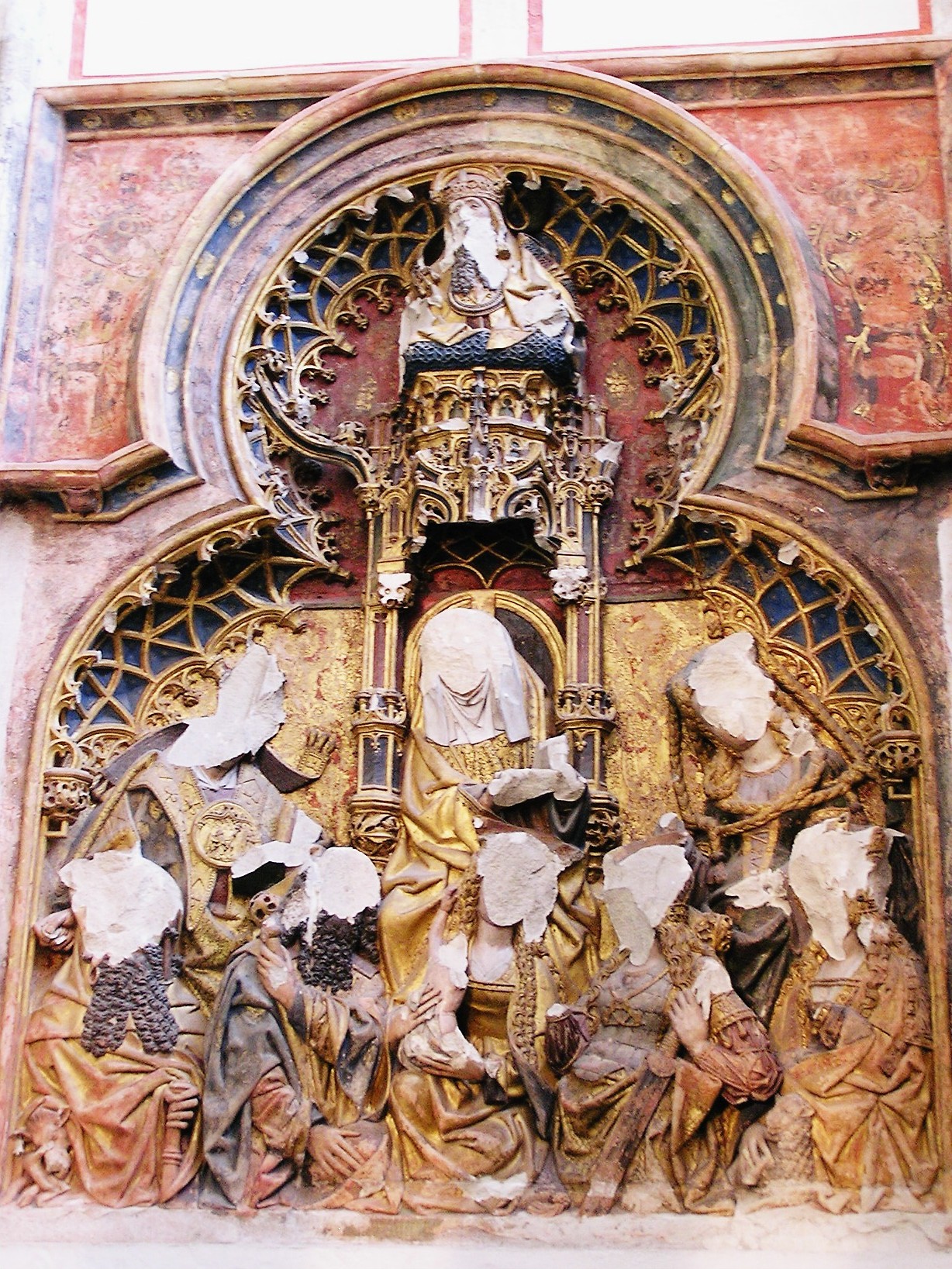
The idea for this article started originally as a reaction to a particularly heated discussion in a grad class on case studies on asymmetric movements, where a colleague dismissed the utility of “historical examples.” I can only assume they meant generally older historical examples from before the 20th century, otherwise the class would have been a wasted exercise. But I use this as a microcosm for the general view within international-relations circles: history as a discipline is viewed as something to joylessly slog through before you can get to the “good stuff” of your particular sub-discipline. Naturally, as a recovering historian, I was (and still am) concerned about the tendency towards what can best be described as chronological myopia where insurgencies seem to vanish between the ancient examples of the Great Jewish Revolt and the 19th century.
From my perspective, the early modern period (rather arbitrarily described as 1452-1815) is particularly enlightening when trying to understand the mentalities underlying ideologies like the Takfiri Jihadists that make up ISIS. By keeping early-modern European examples in mind, the mindset of Jihadist terrorists become, worryingly, much less alien. Today if we imagine coming across an article in any newspaper describing the gleeful destruction of religious artifacts by religious fanatics dedicated to purging their communities of idolatry, we would assume inevitably that it is another addition to the long tally of crimes committed by Boko Haram or the Islamic State. If we turn to the beginnings of similar newspapers in the sixteenth century a contemporary reader would find the same reports as Dutch iconoclasts attacked symbols of the Catholic faith and in doing so, challenged the authority of their Spanish overlord. The dynamic interaction of religious ideology and political action proved a crucial element of the outbreak of the Dutch revolt and its ability to wage a sustained war that dragged on for eight decades. The popular rebellion evolved into a determined separatist movement in the face of overwhelming and indiscriminate Spanish retaliation, forcing the world-spanning Spanish empire into a campaign in a “universal quagmire… the buttock of the world, full of veines and bloud, but no bones.[sic]”[1]
After skillful marriage alliances undertaken by the Habsburg dynasty,[2] modern-day Belgium, Netherlands and Luxembourg fell under the inheritance of Charles V[3] (r.1519-1556), along with the dynasty’s holdings in central Europe and the Iberian peninsula. Since the fractious seventeen provinces of the Low Countries viewed Charles V as one of “their own”, the honeymoon phase of their relationship lasted surprisingly long, however as the cost of waging war against the French Valois dynasty rose and the threat of the Protestant faith loomed, taxes and other “intrusive” policies riled Dutch notables. This dual tension, of a secular authority overstepping their contractually defined limits with regards to taxation combined with action to limit heretical influence to rob Spanish authorities of political legitimacy in the eyes of their Dutch subjects.
The Low Countries occupied a sensitive spot for the Habsburg dynasty, flanked by arch-rivals France and (just across the channel) England, the region lay at the confluence of several profitable trade routes and was by far the most heavily urbanized area on the continent. Boasting more than 200 towns, with nineteen of them with a population greater than 10,000 compared to England’s three, the Low Countries bristled with both church steeples and modern fortifications. [4] Its wealth however made it a tempting target, and the same trade routes that enriched burgher and noble alike carried insidious Calvinist influence from Geneva, Scotland, and France. With these factors in mind, the Low Countries were not just a strategic liability but placed the Spanish monarchy on the front lines of a war for salvation.[5] Caught in the middle of these trends lay the moderate city leadership of the Low Countries as what began as a protest regarding a feudal contract took on a religious and nationalist war spurred by unrelenting military repression.
The abdication of Charles V, and the resulting elevation of his son Philip II (r. 1556-1598) to the Spanish Habsburg domain, placed a distant monarch in the unenviable position of needing to institute “innovations” in a territory far removed from his seat of power in Madrid. Having no ability to speak Dutch, no native advisors, and a decided distaste for the weather and people of the Low Countries, Philip II attempted to micromanage the affairs of the region. At each step, from the moment the first envoy left Madrid to his arrival in the Low Countries months(!) later where his half-sister Margaret ruled as his representative, Philip’s policies were undercut, misinterpreted, or outright ignored. Attempts to restructure the Catholic Church in the Low Countries to better combat the rising tide of Calvinism alienated moderate leaders, who simultaneously professed their loyalty to the Spanish monarch while protesting his meddling in their internal affairs.[6] Dismissed as “beggars” by one of Margaret’s advisors, they embraced the title and doubled down on their earnest professions of loyalty to Philip II and (with no small amount of tension) their “contempt for Catholic religious practice.”[7] While they managed to win a reprieve from the most repressive of Philip’s decrees due in part to the paucity of available Spanish troops, these “beggars” gradually found themselves forced into becoming the party of rebellion by the outbreak of popular demonstrations.
The weakening of the inquisition in the Low Countries brought a surge of returning Calvinist refugees[8] and reinvigorated the “hedge preachers” throughout the countryside. Combined with a series of crop failures, this overheated atmosphere of religious fervor exploded in 1566-1567 in a fury of iconoclasm. Calvinists, convinced that the statues, stained glass, and elaborate trappings of high Renaissance Catholicism presented an immediate danger to their salvation descended on churches throughout the Low Countries. The iconoclastic storm that broke across the Low Countries was an entirely unintended side-effect of the Beggars’ protests, fearing the “violence, disobedience, revolt, and disrespect for law and property.”[9] As iconoclasts chiseled images of the Last Judgment off of church walls they also committed an act of political protest by attacking Catholic churches in a land ruled by a most Catholic king; they struck not just at idolatry but at the authority of the Spanish monarchy itself.[10] By protesting Spanish interference in Low Country affairs the Beggars had set the stage, albeit unintentionally, for the incidences of iconoclasm, as well as the Spanish response.[11]

Before news of the mayhem of the summer of 1566 arrived in Madrid in September, Philip’s eyes were riveted on the war against the Turks in the Mediterranean. After the initial shock which rendered Philip bedbound for days wore off, he dispatched the Duke of Alba[12] with 10,000 troops and full authority to restore order and true religion. This conflation of heresy and rebellion against secular authority rendered toleration an impossibility, as negotiating with heretics who had destroyed holy relics not only sapped the authority of the state but put the salvation of the kingdom at stake.[13] Not only were the troops billeted in cities that were iconoclast centers, Alba instituted a “Council of Troubles” (memorialized by Dutch patriots as the “Council of Blood”) to prosecute suspected rebels and ensure means of funding the entire expedition.[14]
With 12,000 trials, 9,000 condemnations, and 1,000 executions, the overwhelming show of force ended the first revolt, but acted as the first step on driving together the disparate provinces of the Low Countries into a cohesive nation-state known as the United Provinces. By executing prominent (and outwardly loyal) Beggar nobles Alba created martyrs, by dismantling local governments and by levying new taxes he alienated moderates and appeared to act as a tyrant.[15] For Alba’s fury, the Beggars were indistinguishable from the iconoclasts, and the two camps were driven together and soon became inseparable. The hard line advocated by Alba held an even sharper edge when the troops stationed in the Low Countries had their payment postponed repeatedly, and took to extracting their pay directly from the inhabitants of the cities upon whom they were billeted. In doing so, they simultaneously hamstrung Philip’s war efforts and fueled the ardor of rebels.[16] The nature of sixteenth century siege warfare alone drove brutality on both sides, and the cost of maintaining the war effort in the Low Countries drained the Spanish treasury while reinforcing a the sense of nationalism amongst the provinces of the region. [17]
As Alba’s war effort dragged on, and Spanish resources distracted with fighting in the Mediterranean, the term “to put a pike in Flanders” became synonymous with an impossibly expensive task. Despite bankruptcy, a peace could not be honorably sought out due to the religious question, as “Spain still refused to tolerate Protestantism in a reconciled Netherlands state, and the Dutch rebels would not recognize the king’s authority again without it.”[18] By this stage, a military victory was no longer possible in the heavily fortified Low Countries, and a negotiated settlement remained a non-starter. In these circumstances, the remainder of the Dutch revolt remained a bloody stalemate until the mid-seventeenth century, with repeated interventions by French and English forces.[19] Ultimately, the fighting in the Low Countries would only end with the recognition of the United Provinces of the Dutch Republic as an independent state in 1648, with the heavily Catholic southern provinces partitioned away to remain under the Habsburgs.
The first nineteen years of the revolt between 1566 and 1585 marked the most formative period of the Dutch Revolt, as what began as a particularistic dispute regarding feudal obligations was forged into a nationalistic war of liberation through the unexpected intercession of radical Calvinists. These Calvinist insurgents, acting outside the power of even local officials, provoked an overwhelming military response from a deeply religious monarch, whose political authority was steeped in the sacred, and was thus unable to differentiate between rebels and heretics. By dispatching men like the Duke of Alba, Philip’s determination to reclaim the Low Countries for the one true faith alienated loyalists and drove together the fractured polities of the Netherlands, and ultimately created a novel political system: the Dutch Republic.
References
Arnade, Peter. Beggars, Iconoclasts & Civic Patriots. Ithaca: Cornell University Press, 2008.
Dunn, Richard S. The Age of Religious Wars: 1559-1715. New York: W.W. Norton, 1979.
Mackenney, Richard. Sixteenth Century Europe: Expansion and Conflict. New York: Palgrave, 1993.
Parker, Geoffrey. The Grand Strategy of Philip II. New Haven: Yale University Press, 1998.
[1] Geoffrey Parker, The Grand Strategy of Philip II (New Haven, Conn., Yale University Press: 1998),115.
[2]The marriage politics of the Habsburgs would result in the intense downward spiral of their Spanish inheritance. Surprising no one, three generations of uncles marrying their nieces produced offspring decidedly unfit to rule.
[3] For an idea of the extent of his holdings, aside from his office of Emperor of the Holy Roman Empire, his demesne included four kingships, one archdukedom (Austria), six dukedoms, and nine counties. His abdication in 1555 in favor of his brother (who took the German Habsburg lands) and son (who took the Spanish domains) marked a sea change in Low Country policies.
[4] Parker, The Grand Strategy of Philip II, 115.
[5] Richard Mackenney, Sixteenth Century Europe: Expansion and Conflict (New York, Palgrave: 1993), 162-164.
[6] The selection of officials to fill these new bishoprics was made in Spain, depriving local officials the opportunity to expand their network of clients and, to put it more bluntly, wet their beaks. Mackenney, Sixteenth Century Europe, 300-301.
[7] Peter Arnade, Beggars, Iconoclasts and Civic Patriots: The Political Culture of the Dutch Revolt (Ithaca, NY, Cornell University Press: 2008), 80-81.
[8] Fittingly enough, these refugees were “radicalized” in France and Geneva, and returned to the Low Countries armed to the teeth with theological justifications for resistance and revolt.
[9] Arnade, Beggars, 99-100.
[10] Arnade, Beggars, 116-117. In some cases, iconoclasts visited the same tortures upon statues that Catholic authorities had inflicted on Calvinist martyrs.
[11] One of the great ironies of the Beggars lay in the fates of some of its most prominent members: The Duke of Egmont, often included in the hagiography of Dutch Republican martyrs, was actively prosecuting (and executing) iconoclasts up until his arrest and execution by Philip II for aiding iconoclasts.
[12] To give an idea of his counter-insurgency policy, Alba’s advice to his successor in 1573 stated “These troubles must be ended by force of arms without any use of pardon, mildness, negotiations or talks until everything has been flattened. That will be the right time for negotiation.” Mackenney, Sixteenth Century Europe, 300.
[13] Mackenney, Sixteenth Century Europe, 300.
[14] Parker, Grand Strategy of Philip II, 122-123.
[15] Mackenney, Sixteenth Century Europe, 302. Richard S. Dunn, The Age of Religious Wars: 1559-1715 (New York, W.W. Norton: 1979), 42.
[16] Arnade, Beggars, 220.
[17] The siege, destruction, and re-taking of Antwerp alone in 1572-1574 produced enough fodder for reams of cheap broadsheets and woodcuts to be circulated throughout the Low Countries. A tragedy for one province was felt by all seventeen. Arnade, Beggars, 242.
[18] Parker, Grand Strategy of Philip II, 140.
[19] Parker, Grand Strategy of Philip II, 140-144.
 Le Grognard